
Ankle Posterior Drawer Test
Ankle Posterior Drawer Test - Web testing for:posterior talofibular ligament injury and/or ligamentous instability procedure: In particular, it prevents the talus bone from moving too far forward. On the medial, lateral, posterior and anterior part of the lower leg and the around calcaneus; Web the anterior drawer test can be used to assess the integrity of the anterior talofibular ligament 8 , and the inversion stress test can be used to assess the integrity of the calcaneofibular. Want to join the oep community? The examiner attempts to translate the fibula from anterior to posterior. For this test, the examiner stabilizes the patient's lower leg with one hand, puts the other hand under the patient's foot and cups the heel, and pulls the heel anteriorly. The anterior drawer test for ankle. Web anterior drawer test: Web the painful conditions of the ankle and foot are very common presentations and most commonly caused by trauma or injury related to sport activities. For this test, the examiner stabilizes the patient's lower leg with one hand, puts the other hand under the patient's foot and cups the heel, and pulls the heel anteriorly. Test for “high” (syndesmotic) ankle sprain (see below) imaging. Healthcare providers sometimes call this a posterior drawer test, and some perform it at the same time as an anterior drawer test. It is important to be familiar with some basic physical exam maneuvers necessary to confirm the presence of a lesion and to assess its severity. Web the posterior drawer test is used to assess the integrity of the posterior cruciate ligament. Plays only a supplementary role in ankle stability when the lateral ligament complex is intact. Web anterior drawer test: Joint laxity indicates a positive test. At the attachments of the medial and lateral ligaments; •patient is supine with foot relaxed •examiner stabilizes tibia and fibula with one hand •with the patient’s foot plantar flexed to 20 degrees, the examiner holds the patient’s calcaneus with other hand then distracts the calcaneus from the tibia and fibula ( by slowly pulling the calcanues inferiorly) Web instability after ankle sprains, particularly lateral sprains, is assessed by the anterior drawer test. Peroneus longus and brevis tests; Under greatest strain in ankle dorsiflexion and acts to limit posterior talar displacementwithin the mortise as well as talar external rotation. Stabilize the ankle with your hip and push the proximal tibia posteriorly (away from you). Web anterior drawer test: Stabilize the ankle with your hip and push the proximal tibia posteriorly (away from you). For this test, the examiner stabilizes the patient's lower leg with one hand, puts the other hand under the patient's foot and cups the heel, and pulls the heel anteriorly. This test assesses for a tear of the posterior cruciate ligament (pcl). Anterior drawer sign. Validated only for patients > 17 years old. Anterior drawer sign this is a provocative test. Web the posterior drawer test is used to assess the integrity of the posterior cruciate ligament. On the medial, lateral, posterior and anterior part of the lower leg and the around calcaneus; Web the anterior drawer test can be used to assess the integrity. Plays only a supplementary role in ankle stability when the lateral ligament complex is intact. With the knee flexed to 90 degrees and the foot stabilized (often the examiner sits on the patient's foot), the proximal tibia is grasped firmly with both hands and the tibia is forcibly pushed posteriorly, noting any laxity compared with the other side. Under greatest. Validated only for patients > 17 years old. Web posterior drawer test. On the medial, lateral, posterior and anterior part of the lower leg and the around calcaneus; We have a new website!! Want to join the oep community? This test helps to rule in a positive posterior talofibular ligament sprain. Web instability after ankle sprains, particularly lateral sprains, is assessed by the anterior drawer test. The examiner attempts to translate the fibula from anterior to posterior. Web the posterior drawer test is used to assess the integrity of the posterior cruciate ligament. You’ll lie on your back and. Web test competency by anterior drawer in 20° of plantar flexion and compare to uninjured side. Want to join the oep community? Click here to check it out:. For this test, the examiner stabilizes the patient's lower leg with one hand, puts the other hand under the patient's foot and cups the heel, and pulls the heel anteriorly. Web testing. Plays only a supplementary role in ankle stability when the lateral ligament complex is intact. Web ankle posterior drawer test is performed with the patient lies supine with the knee slightly flexed to neutralize the pull of the gastrocnemius muscle. Web testing for:posterior talofibular ligament injury and/or ligamentous instability procedure: Test for “high” (syndesmotic) ankle sprain (see below) imaging. Web. Web testing for:posterior talofibular ligament injury and/or ligamentous instability procedure: Anterior drawer of the ankle. You’ll lie on your back and a provider will move your lower leg to check how far your knee moves. Web about press copyright contact us creators advertise developers terms privacy policy & safety how youtube works test new features nfl sunday ticket press copyright.. Anterior drawer of the ankle. The examiner attempts to translate the fibula from anterior to posterior. A sensitivity of 52% has been reported in a single study for the inversion talar tilt test. This test assesses for a tear of the posterior cruciate ligament (pcl). The anterior drawer test helps evaluate ankle injuries, particularly from outward rolls that may stretch. Stabilize the ankle with your hip and push the proximal tibia posteriorly (away from you). •patient is supine with foot relaxed •examiner stabilizes tibia and fibula with one hand •with the patient’s foot plantar flexed to 20 degrees, the examiner holds the patient’s calcaneus with other hand then distracts the calcaneus from the tibia and fibula ( by slowly pulling the calcanues inferiorly) Web the anterior drawer test checks the health of the anterior talofibular ligament (atfl), a key ligament that helps keep the ankle joint stable. Web anterior drawer test (integrity of anterior talofibular ligament). It is important to be familiar with some basic physical exam maneuvers necessary to confirm the presence of a lesion and to assess its severity. Increased translation relative to the contralateral. Want to join the oep community? On the medial, lateral, posterior and anterior part of the lower leg and the around calcaneus; Click here to jump onto our email list. The examiner attempts to translate the fibula from anterior to posterior. For this test, the examiner stabilizes the patient's lower leg with one hand, puts the other hand under the patient's foot and cups the heel, and pulls the heel anteriorly. In particular, it prevents the talus bone from moving too far forward. The anterior drawer test for ankle. Healthcare providers sometimes call this a posterior drawer test, and some perform it at the same time as an anterior drawer test. Click here to check it out:. The patient is positioned to promote relaxation with the knee flexed to 90 degrees and the ankle positioned at 90 degrees.
Posterior Drawer Test I 후거비인대(PTFL) 염좌 평가 I ankle10 YouTube

Posterior Drawer Test, PCL Injury Tests —

Posterior Drawer Test Posterior Cruciate Ligament YouTube
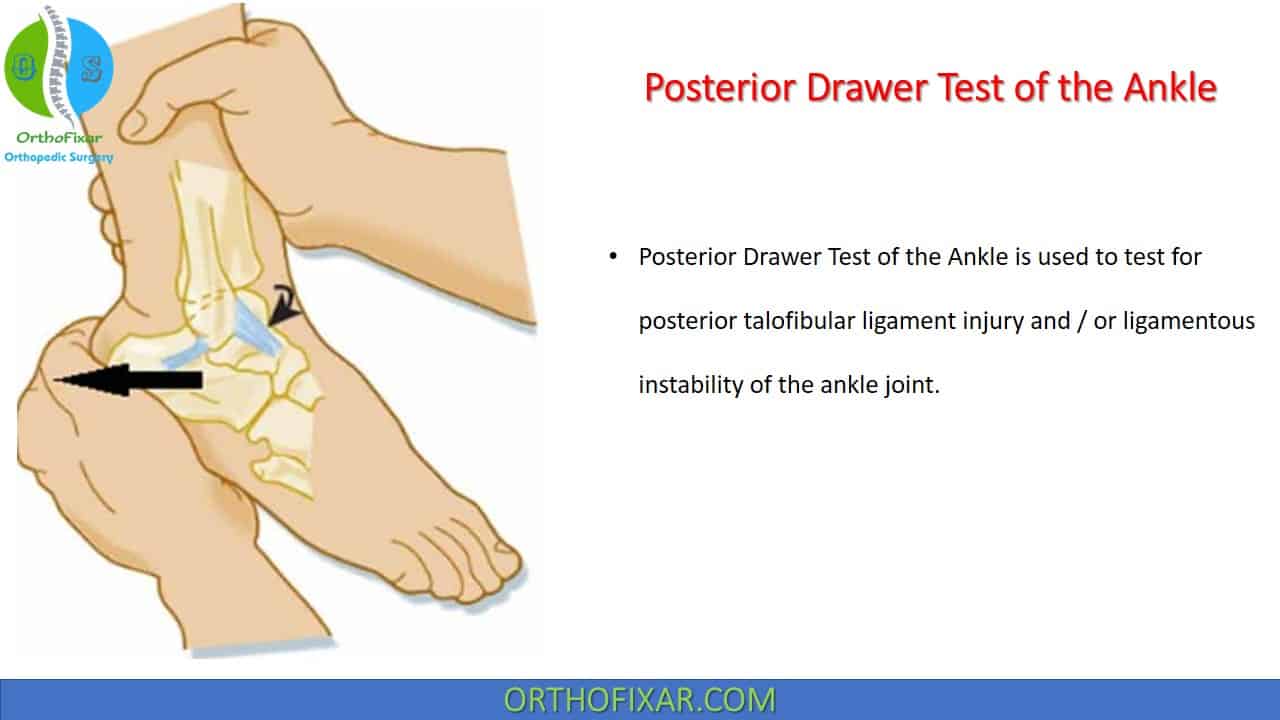
Posterior Drawer Test Of The Ankle 2024

Posterior drawer test for the ankle YouTube
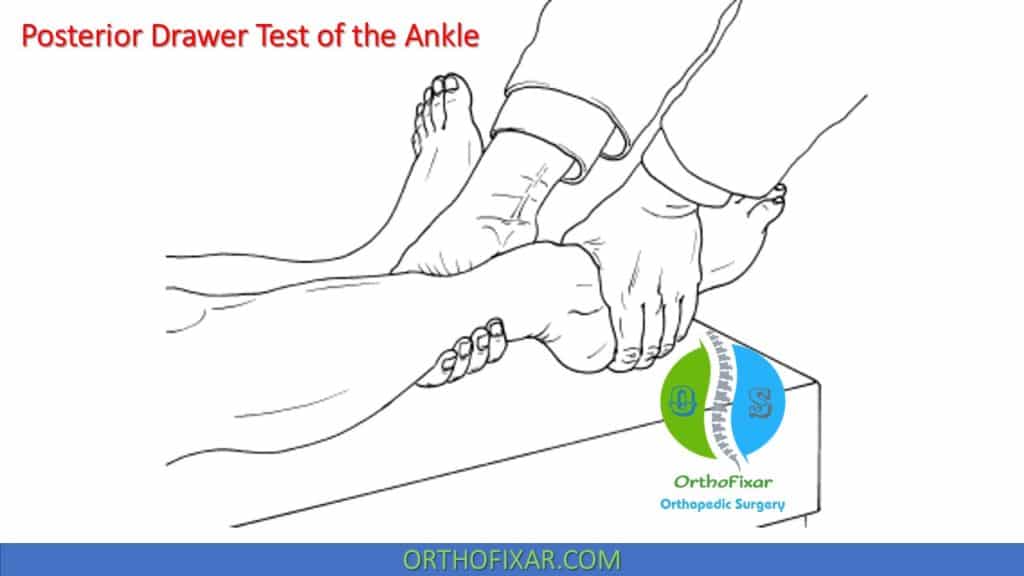
Posterior Drawer Test Of The Ankle 2024
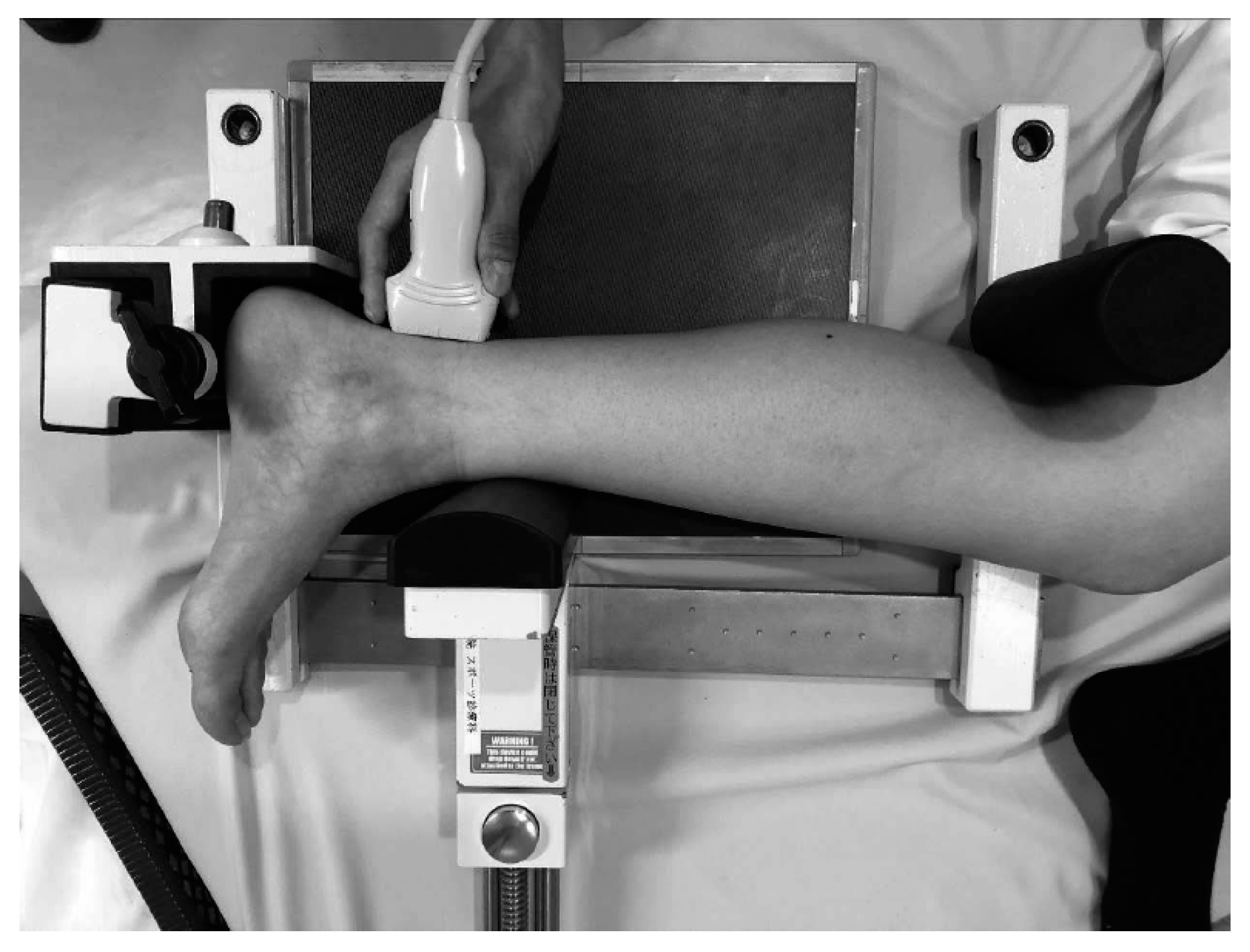
Posterior Drawer Test Ankle
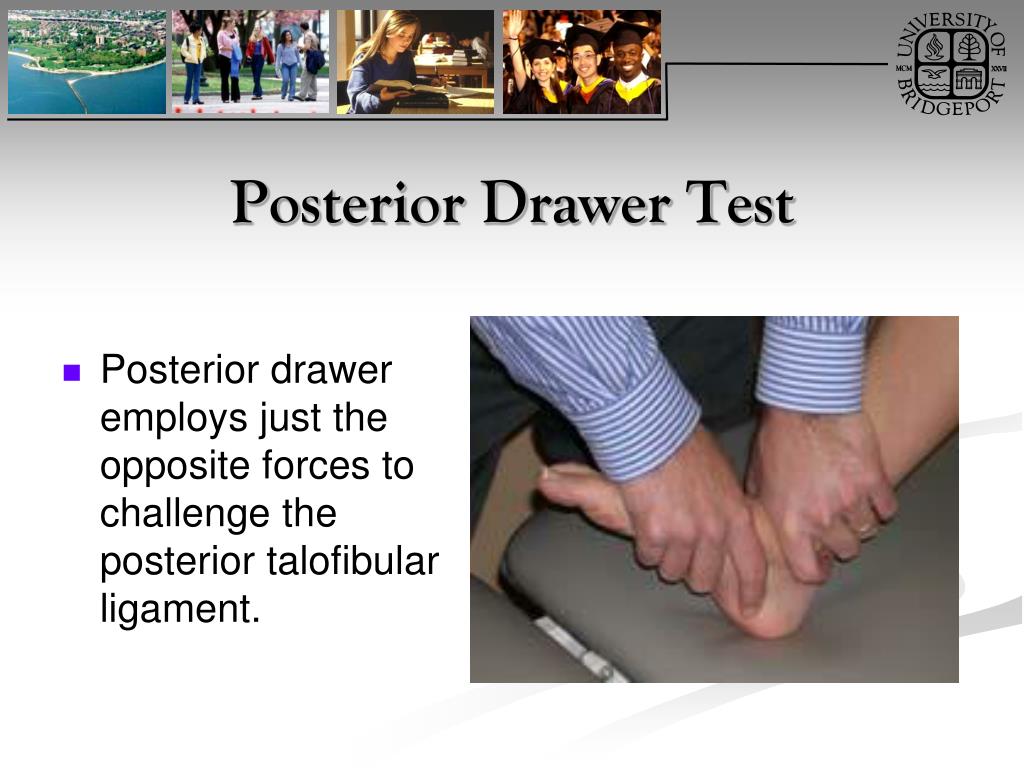
PPT Ankle and Foot Orthopaedic Tests Orthopedics and Neurology DX 612

Ankle Posterior Drawer Test YouTube

Posterior Drawer test of ankle YouTube
Web This Video Demonstrates How To Perform A Posterior Drawer Test For The Ankle.
A Sensitivity Of 52% Has Been Reported In A Single Study For The Inversion Talar Tilt Test.
The Anterior Drawer Test Helps Evaluate Ankle Injuries, Particularly From Outward Rolls That May Stretch Or Tear The Atfl.
Anterior Drawer Sign This Is A Provocative Test.
Related Post: